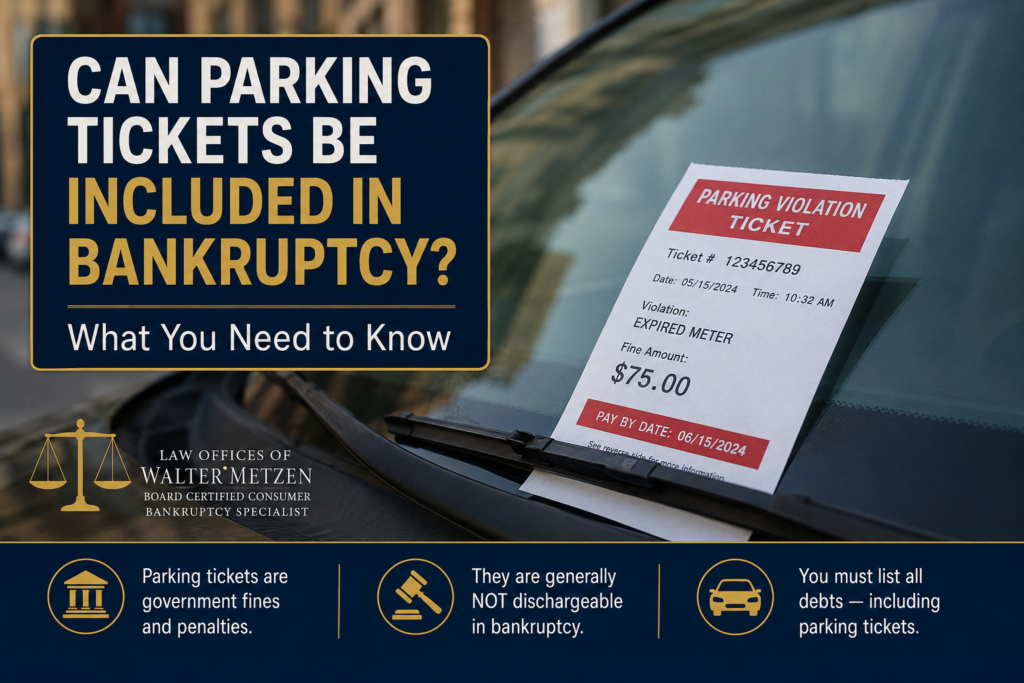
Can Parking Tickets Be Included in Bankruptcy?

Published
One of the questions I occasionally hear from clients is:
“Can I include my parking tickets in my bankruptcy?”
The short answer is yes, you should list them in your bankruptcy schedules. However, there is an important distinction that surprises many people:
Although parking tickets should be listed in your bankruptcy, they generally are not discharged.
Why Should Parking Tickets Be Listed?
When you file a Chapter 7 or Chapter 13 bankruptcy, the law requires you to disclose all of your debts, whether you believe they will ultimately be discharged or not.
That includes:
- Credit card debt
- Medical bills
- Personal loans
- Tax debts
- Court fines
- Parking tickets
Complete and accurate disclosure is one of the fundamental requirements of bankruptcy. Even if a debt is not dischargeable, it should still appear on your bankruptcy schedules.
Why Aren’t Parking Tickets Discharged?
Parking tickets are generally considered government fines or penalties imposed for violating municipal or state laws.
Under the Bankruptcy Code, certain debts owed to governmental units that are in the nature of a fine, penalty, or forfeiture are excepted from discharge. Congress made a policy decision that individuals should not be able to use bankruptcy to escape the consequences of violating laws that are intended to protect public order and safety.
Legal Authority: Under 11 U.S.C. § 523(a)(7), a bankruptcy discharge generally does not eliminate a fine, penalty, or forfeiture payable to and for the benefit of a governmental unit that is not compensation for actual pecuniary loss. Unpaid municipal parking tickets typically fall within this exception to discharge.
While bankruptcy is designed to give honest debtors a fresh financial start, it is not intended to eliminate governmental penalties imposed for unlawful conduct.
As a result, if you owe unpaid parking tickets before filing bankruptcy, you will usually still owe them after your bankruptcy case is completed.
Why Does the Law Work This Way?
Imagine what could happen if parking tickets were dischargeable.
Suppose someone knew they planned to file bankruptcy six months from now.
If parking tickets could simply be erased in bankruptcy, that person might decide:
- To park in no-parking zones every day.
- To ignore expired meters.
- To leave their vehicle in loading zones.
- To park in fire lanes.
- Or even worse, to repeatedly park in spaces reserved for individuals with disabilities.
They could accumulate hundreds or even thousands of dollars in parking violations, knowing they intended to wipe them out through bankruptcy.
That would create an obvious incentive for people to disregard parking regulations and shift the financial burden to taxpayers and local governments.
Congress recognized this potential for abuse and chose to protect governmental enforcement powers by making these types of fines generally nondischargeable.
Bankruptcy Is Designed to Help With Financial Hardship—Not Eliminate Punishment
Bankruptcy exists to help people overwhelmed by debt resulting from life’s financial challenges such as:
- Job loss
- Medical expenses
- Divorce
- Business failure
- Unexpected financial setbacks
It was never intended to provide immunity from fines imposed for violating laws or ordinances.
Government agencies rely on parking enforcement to keep streets safe, maintain traffic flow, preserve emergency access, and ensure parking is available for those who need it—including individuals with disabilities.
Allowing parking tickets to disappear in bankruptcy would undermine those important public purposes.
Can the City Still Collect After Bankruptcy?
In most cases, yes.
Because parking tickets generally survive the bankruptcy discharge, the governmental agency may continue collection efforts after your bankruptcy case closes. Depending on the jurisdiction, unpaid parking tickets may also result in additional penalties, vehicle registration issues, booting, towing, or other enforcement actions if they remain unpaid.
The Bottom Line
If you have unpaid parking tickets when filing bankruptcy, always disclose them with your other debts. Failing to list a debt is never the right approach.
However, don’t expect bankruptcy to eliminate the obligation to pay them. Parking tickets are generally considered governmental fines or penalties, and Congress has determined that these obligations should survive bankruptcy so that parking laws continue to have meaningful enforcement.
If you’re considering bankruptcy and have questions about which debts can and cannot be discharged, an experienced bankruptcy attorney can explain how the Bankruptcy Code applies to your specific situation and help you understand what your financial fresh start will—and won’t—include.
Attorney Walter Metzen has filed more than 25,000 consumer bankruptcy cases throughout Metropolitan Detroit. If you’re struggling with overwhelming debt and would like to learn how bankruptcy may help you, contact the Law Offices of Walter Metzen to schedule a consultation.