Michigan’s Proposed Bankruptcy Exemption Increases Are Dead for Now: What Happens Next?

Published
For the past several months, Michigan consumers, bankruptcy attorneys, bankruptcy trustees, and creditor advocates have been watching closely as proposed legislation sought to significantly increase the property protections available to Michigan residents filing bankruptcy. Those bills would have modernized Michigan’s bankruptcy exemptions and increased the amount of property debtors could protect from the bankruptcy estate.
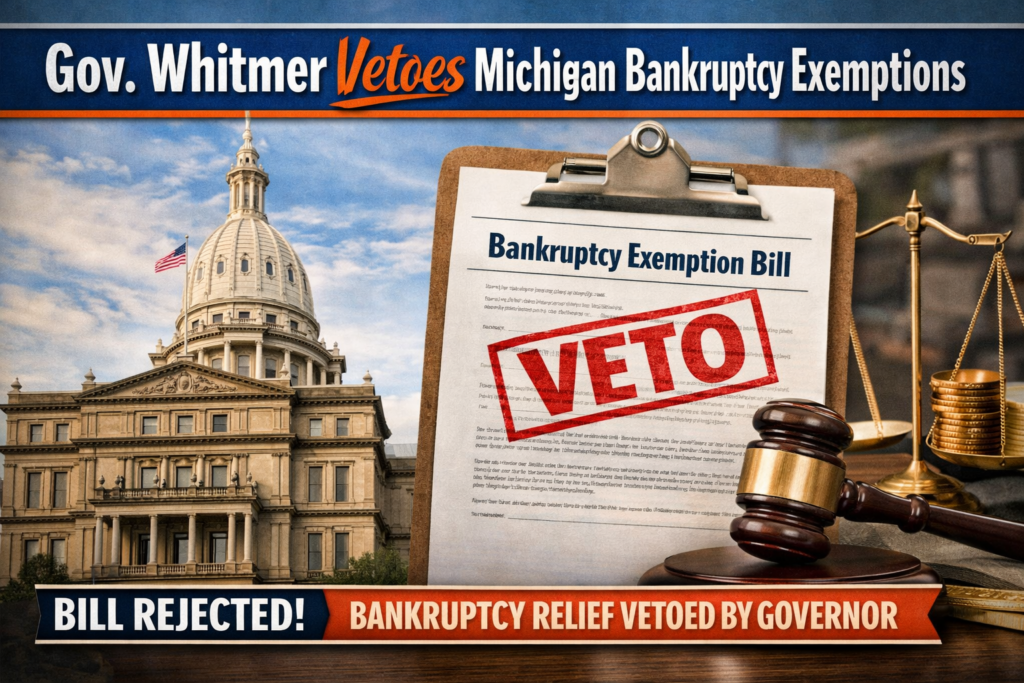
However, that effort has now come to an end — at least for the current legislative session. Governor Gretchen Whitmer has vetoed the bills, meaning the proposed increases to Michigan bankruptcy exemptions will not become law at this time.
For Michigan residents who were hoping the new exemptions would take effect before filing bankruptcy, the practical answer is simple: they cannot be used. Bankruptcy courts must apply the exemptions that are actually in effect on the date a bankruptcy petition is filed.
What Were the Proposed Michigan Bankruptcy Exemption Changes?
The proposed legislation would have increased the protections available to Michigan debtors by raising exemption amounts for important assets such as:
- Home equity;
- Motor vehicles;
- Household goods;
- Personal property;
- A new wildcard exemption;
- Other assets protected from liquidation by a Chapter 7 trustee.
The purpose of bankruptcy exemptions is to balance two competing interests:
- Allowing honest but unfortunate debtors to receive a fresh start; and
- Ensuring that creditors have access to non-exempt assets that can legally be used to repay debts.
Under federal bankruptcy law, a debtor may choose between applicable state exemptions or the federal bankruptcy exemptions if state law permits. Michigan currently requires most residents to use Michigan exemptions rather than the federal exemption scheme, subject to certain exceptions.
Michigan’s existing exemptions have increased over time through inflation adjustments, including periodic adjustments to the amounts listed under Michigan’s bankruptcy exemption statute. However, many consumer bankruptcy attorneys have argued that Michigan’s exemption amounts remain outdated compared with the value of homes, vehicles, and household assets owned by many Michigan families today.
Why Did the Bills Fail?
The legislation became caught up in a broader dispute involving several bills passed by the Michigan Legislature that were not timely presented to the Governor. Litigation followed regarding whether the Governor was required to act on those bills.
After the dispute was resolved and the bills were presented, Governor Whitmer vetoed the legislation. Reports indicate that the Governor cited concerns about retroactive implementation, administrative difficulties, and uncertainty created by the delay in presenting the bills.
Regardless of the political debate surrounding the veto, the legal result is clear:
Michigan’s bankruptcy exemptions remain unchanged.
Does This Mean Michigan Bankruptcy Exemptions Will Never Increase?
No.
The failure of these bills does not mean bankruptcy exemption reform is dead permanently. In fact, the need to update Michigan’s exemption laws remains an issue that will likely return.
Bankruptcy exemptions are intended to reflect economic realities. The cost of housing, vehicles, and basic household necessities has increased dramatically over the last several decades. A homestead exemption that may have provided meaningful protection years ago may not provide the same protection in today’s housing market.
Future lawmakers could introduce new legislation addressing Michigan bankruptcy exemptions. However, any future proposal would need to begin the legislative process again and successfully pass both chambers of the Michigan Legislature before reaching the Governor.
What Should Someone Considering Bankruptcy Do Now?
The failure of the exemption legislation creates an important planning issue for anyone considering bankruptcy.
A person who was delaying bankruptcy because they expected higher exemptions should carefully review their situation. Waiting for possible future legislation may create risks, including:
- Wage garnishment;
- Bank account levies;
- Vehicle repossession;
- Home foreclosure proceedings;
- Additional collection lawsuits.
On the other hand, filing bankruptcy requires careful analysis. The correct timing depends on many factors, including:
- The equity in your home;
- The value of your vehicles;
- Retirement accounts;
- Tax refunds;
- Pending lawsuits;
- Recent transfers of property;
- Income and eligibility for Chapter 7.
There is no universal answer. The right decision requires evaluating the debtor’s individual circumstances under the exemptions that are actually available today.
The Future of Michigan Bankruptcy Exemptions
Michigan’s bankruptcy exemption laws will likely continue to be debated. The proposed legislation highlighted an important issue: whether Michigan’s current protections adequately allow struggling families to keep the basic assets necessary to rebuild their financial lives.
For now, however, bankruptcy attorneys and consumers must work with the law as it exists — not the law that was proposed.
Anyone considering bankruptcy should not assume that higher exemptions are coming soon. Instead, they should evaluate their options under the current Michigan exemption system and determine whether filing now, waiting, or pursuing another solution makes the most financial sense.
The proposed Michigan bankruptcy exemption increases may be gone for now, but the conversation about modernizing Michigan’s bankruptcy laws is unlikely to disappear.