Sports Gambling addiction on the rise in Michigan: The House Always Wins—Until You Take Back Control: Sports Betting Addiction and the Bankruptcy Lifeline

Published
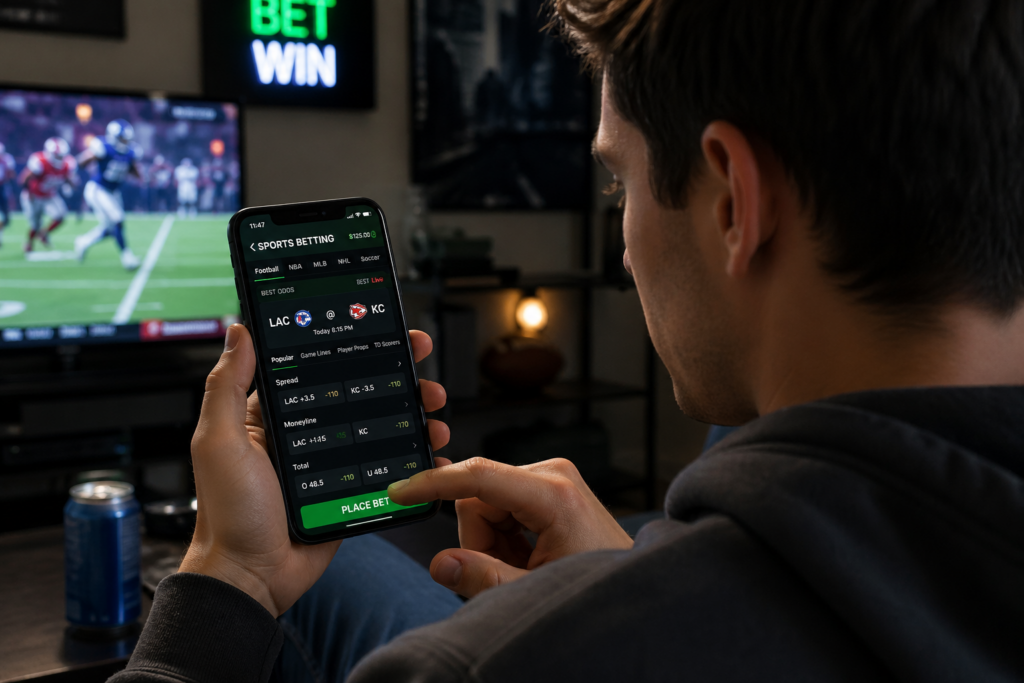
There was a time when placing a wager on a game meant calling a bookie or making a trip to a casino. Today, it’s as easy as pulling a phone out of your pocket. With a few taps, anyone can place bets on point spreads, parlays, or in-game outcomes—24 hours a day, seven days a week. The convenience is undeniable. So is the danger.
I’ve seen the consequences firsthand.
Over the past few years, as sports betting has expanded across the country, a troubling pattern has emerged. What begins as entertainment—“just a little action on the game”—can quickly spiral into something much more destructive. The apps are designed to keep you engaged. The wins are intoxicating. The losses? They’re often chased, doubled down, and buried under the illusion that the next bet will fix everything.
But it doesn’t.
Instead, debt piles up. Credit cards get maxed out. Personal loans are taken to cover gambling losses. Retirement accounts are drained. And for many, the financial damage becomes overwhelming.
That’s where I come in.
The Reality of Sports Betting Addiction
Let’s be clear: gambling addiction is real. It’s not a lack of discipline or intelligence. It’s a behavioral issue that can affect anyone—professionals, students, retirees. The constant accessibility of online betting platforms has only accelerated the problem.
People don’t just lose money—they lose control.
I’ve spoken with clients who started with $50 bets and found themselves tens of thousands of dollars in debt within months. Not years—months. The speed at which financial collapse can occur today is staggering.
And the shame that comes with it often keeps people silent far longer than they should be.
When Debt Becomes Unmanageable
At a certain point, the question shifts from “How do I win it back?” to “How do I get out of this?”
That’s where bankruptcy enters the conversation—not as a failure, but as a legal tool designed to give people a second chance.
Bankruptcy exists for a reason. It’s written into federal law to help individuals who are overwhelmed by debt reset their financial lives. And yes, that includes debt caused by gambling.
How Bankruptcy Can Help
Depending on your situation, there are typically two paths:
Chapter 7 Bankruptcy can eliminate most unsecured debts—credit cards, personal loans, and other obligations often used to fund gambling. It’s a relatively quick process and, for many, provides immediate relief.
Chapter 13 Bankruptcy allows you to reorganize your debt into a manageable repayment plan, usually over three to five years. This can be a good option if you have steady income and want to protect certain assets.
Now, let’s address the elephant in the room: Can gambling debts really be discharged?
In most cases, yes.
There are exceptions—particularly if fraud is involved—but simply losing money through legal sports betting does not automatically disqualify those debts from being wiped out. Every case is different, and this is where experienced legal guidance matters.
More Than a Financial Reset
Bankruptcy isn’t just about numbers on a balance sheet. It’s about creating space—space to breathe, to regroup, and to rebuild.
But I’ll be candid: bankruptcy alone doesn’t fix a gambling problem.
If sports betting addiction is part of your story, addressing the behavior is just as important as addressing the debt. That might mean counseling, support groups, or putting safeguards in place to prevent future access to betting platforms.
The legal solution and the personal solution need to work together.
Taking the First Step
If you’re reading this and recognizing your own situation, here’s what you should know: you’re not alone, and you’re not out of options.
Ignoring the problem won’t make it go away. Waiting for a “big win” to fix the damage is a gamble you simply can’t afford to keep taking.
There is a way forward.
Bankruptcy isn’t the end of your financial story—it’s often the beginning of a smarter, more stable chapter. The key is taking that first step and having an honest conversation about where you are and where you want to go.
Because while the house may have the odds, you still have a choice.
And that choice can change everything.
Gambling addiction on the rise. Michigan does less than most states to help
I was recently cited in an article written by Miles MacClure for Bridge Michigan discussing the real impact of sports betting addiction here in Michigan, and from what I see in my practice, the problem has become severe. I’ve worked with clients who have accumulated massive gambling debts—one nearing $200,000—and others who have placed extremely large bets on single games.
There’s a pattern I see over and over again. It often starts with people using their savings. When that runs out, they begin borrowing from friends and family. After that, they turn to credit cards and loans. Eventually, the cycle collapses, and they’re left overwhelmed, with bankruptcy becoming the only realistic option.
But it’s not just financial. I’ve seen the personal toll this takes—relationships strained or destroyed, and people reaching a point where they feel completely out of options.
From where I stand, this reflects a bigger issue. The rapid expansion of online sports betting—driven in part by state policy—has outpaced the protections in place for consumers. And as a result, more people are falling into addiction and facing serious financial consequences.
For full context, you can read the original article here:
https://www.bridgemi.com/michigan-government/online-betting-addiction-michigan-bankruptcy-rise
Here is the full article:
As online betting becomes increasingly popular, Michigan does less than other states to help people with gambling addictions.
Michigan, which received a failing grade from an advocacy group for its efforts to protect gamblers, pulled in $624.6 million off online gambling last year, including $27.1 million in taxes and fees from sports betting. Gov. Gretchen Whitmer has proposed a per-wager tax meant to bring in even more.
But little of that money goes toward preventing the addiction that comes from easy access to wagers. This year, the state allocated $9.5 million to gambling addiction services.
Other states with online betting such as Iowa, Massachusetts, and Tennessee do things like prohibit the use of credit cards on sports betting apps. Michigan, however, allows online gaming platforms to offer bets even to people exhibiting addictive behaviors, according to the Center for Addiction Science, Policy, and Research, which gave Michigan an F- for its addiction protections.
Problem with gambling? Get help
Those with a gambling problem or their loved ones can get free help by calling 800-270-7117 or visiting michigan.gov/mdhhs/keep-mi-healthy/mentalhealth/gambling.
Without additional guardrails implemented by the state to prevent significant financial loss or mechanisms to curb gambling and sports betting addiction, problem gambling will likely continue to rise, said Karley Abramson, a research associate at the Citizens Research Council of Michigan.
“ We have no reason to think that this will just be solved on its own,” she said.
Legalized online gambling ignited a flood of betting in Michigan — $3.8 billion in 2025, including $671.3 million on online sports betting, a nearly 30% increase from 2024, according to state records.
With that gambling has come a rise in gambling addiction and the financial struggles that come with it. Thousands of calls come in every year to the state’s gambling addiction helpline and bankruptcy attorneys say an increasing number of their cases are linked to online gaming.
Detroit attorney Walter Metzen said one of his clients racked up nearly $200,000 in debt from online sports betting, while another wagered $20,000 on single football games.
“Just in the last couple years, at least a dozen guys I can think of told me they were at the end of their rope,” said Metzen. “They had burned their friendships by borrowing money from friends to feed their addiction.”
‘Readily available, limitless’
It all started in 2018, when the US Supreme Court struck down the Professional and Amateur Sports Protection Act, a 1992 federal law that prohibited gambling on sports.
Since then, sports betting has become legalized in states across the country and a wave of uncouth behavior has followed. Professional athletes have reported harassment from fans who lost money gambling on games, including death threats reported by The Athletic.
Previously, gambling in Michigan was confined to select casinos throughout the state, but the legalization of online gambling has granted anyone with a smartphone round-the-clock access to virtual blackjack tables and sportsbooks.
“Part of the problem is that the ease of access to online sports betting is unlike the access to any other kind of vice or entertainment product that can lead to addictive behavior,” Abramson, of the Citizens Research Council, said. “It’s just on our phones, readily available, limitless.”
For some gamblers, that immediate access to gambling has proven financially catastrophic.
“At first they exhaust their savings, they might raid their 401(k), they start borrowing from friends and family, they use online loans, credit cards, until that pyramid collapses and they can’t borrow anymore,” said Metzen, the Detroit bankruptcy attorney.
Last year, researchers at Southern Methodist University found that calls to gambling helplines nationwide increased 75% after the legalization of online sports betting. The same group of researchers reported that rates of irresponsible gambling (defined as spending more than 1% of one’s income on gambling) increased the most among low-income individuals.
Last year, the state fielded 3,393 gambling-related calls to its Gambling Disorder Helpline, according to a public records request filed with the department.
Matthew Frey, a bankruptcy attorney in Saginaw, said some bankruptcy cases have failed because debtors have continued gambling during the bankruptcy.
“ They can’t make their monthly plan payment when they’re gambling all their money,” Frey said. “They complain they have no money to eat on and we ask them, ‘Well, where’s it going?’ And it’s, it’s going to DraftKings. It sneaks up on people how much money it’s sucking out of them, and they just don’t see it until it’s too late.”
Paul Bare, a bankruptcy attorney in Traverse City, said it’s typical to see a gambling-related bankruptcy in which a debtor owes around $70,000 in gambling debt.
“But where it finally ends is that you can no longer make the payments on the cards without using the other cards to live on, and that’s where the cycle ends,” said Bare.
A failing grade
Michigan has some programs to help people with a gambling problem.
When Michigan legalized online gambling, for example, the Michigan Gaming Control Board implemented a new program called the Responsible Gaming Database. The program allows individuals to add their name to a list of people who cannot create online gambling accounts.
Since that program was implemented in 2021, the number of individuals who have self-excluded has risen each year. In 2021, 78 people self-excluded from online gambling. In 2025, 1,644 were on the self-exclusion list for online gambling.
A similar program exists for the three Detroit casinos, called the Disassociated Persons List. Those on that list can be arrested for criminal trespassing if they enter any of the Detroit casinos. Since that list began in 2001, 4,244 people have self-excluded from in-person gambling at the Detroit casinos.
Still, advocates say far more is needed.
In March, the Center for Addiction Science, Policy, and Research ranked Michigan 49 out of 52 states and territories — an F- grade — for online gambling protections. CASPR gave Michigan a lowly ranking in part because of its lack of mechanisms to prevent addiction or bankruptcy, particularly the ability for sportsbook operators to offer bets to individuals exhibiting signs of gambling addiction.
The ranking also noted Michigan’s “unusually low” tax on online gambling.
CASPR recommended legislation that would prevent gamblers from using credit cards on gambling apps and require a “mandatory cool-off” period for gamblers who have lost more than $500 within a 30-day period.
Several of the largest sportsbooks have recently banned credit card payments on their apps. DraftKings stopped accepting credit cards in August 2025, FanDuel stopped accepting credit cards on March 2, and BetMGM announced it would begin phasing out credit card payments on March 31.
In November, state Sen. Erika Geiss, D-Taylor, introduced two bills that would place stricter regulations on advertisements for sports gambling and internet gambling in Michigan, including a ban on targeted gambling advertisements to individuals younger than 21.
“The surge of sports betting and online gambling has led to a steep uptick in marketing campaigns that often glamorize gambling, downplay the dangers of addiction, and have reached impressionable audiences who are far too young to legally participate,” Geiss wrote in an email to Bridge Michigan. “The design of bright lights, flashing colors, catchy slogans, and celebrity endorsements mirror the tactics that cigarette companies used to make their product seem cool and appeal to underage people, leading to countless adverse outcomes and addicted customers that lasted generations.”
The Citizens Research Council has recommended barring prop bets, as well as prohibiting sports betting companies from using algorithms to offer customized bets to users based on their betting history.
Metzen, the bankruptcy attorney, whose son attends Michigan State University, said his son’s friends have taken up sports betting, some of whom claim to have made thousands from longshot parlays.
“ I guarantee you he placed a hundred bets before he hit that parlay, you know?” Metzen said. “He’s not telling you about the money he lost.”