How do Creditors get Notified when your Bankruptcy Petition is Filed with the Bankruptcy Court

Published
When a bankruptcy case is filed today, creditors usually learn about it very quickly through a combination of electronic court noticing systems, mailed notices, and commercial bankruptcy monitoring services.
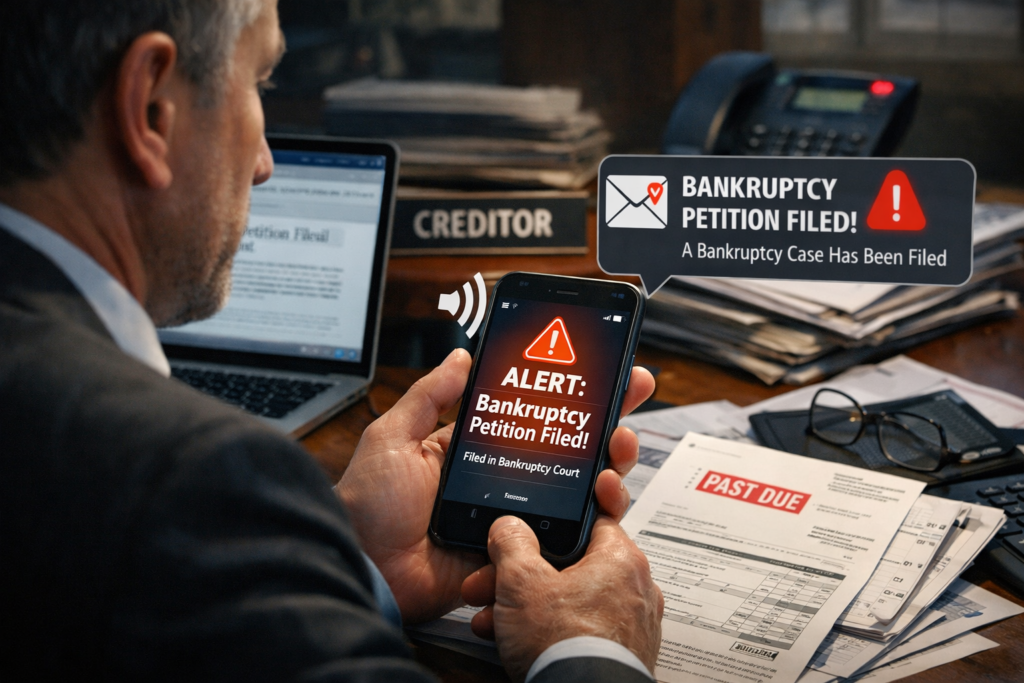
Table of Contents
- How Creditors Find Out About a Bankruptcy Filing Today
- The Official Notice Comes From the Bankruptcy Court System
- The Bankruptcy Noticing Center Sends the Notice
- Many Creditors Don’t Wait for the Mail at All
- Common Bankruptcy Monitoring and Noticing Companies
- The Federal Court Record System Is Public and Accessible
- Why Collection Activity Stops So Quickly
- The Bottom Line
How Creditors Find Out About a Bankruptcy Filing Today
One of the most common questions people have when considering bankruptcy is: “How will my creditors even know I filed?” The answer is that creditors are notified through a highly automated, fast-moving system that combines federal court notices, centralized mailing services, and private bankruptcy monitoring companies.
In most cases, creditors find out about a bankruptcy filing very quickly—often within hours or days of the case being filed.
Here’s how the process actually works.
The Official Notice Comes From the Bankruptcy Court System
When a bankruptcy case is filed, it is entered into the federal court system immediately. The court then generates an official notice called the Notice of Bankruptcy Case Filing.
This notice includes key details such as:
- The debtor’s name and case number
- The bankruptcy chapter filed (Chapter 7, 13, etc.)
- The assigned trustee
- The date and time of the 341 meeting (creditor meeting)
- Important deadlines (like objections or claims deadlines)
- Notice of the automatic stay (which stops most collection activity immediately)
This notice is the official legal notification that a bankruptcy case exists.
The Bankruptcy Noticing Center Sends the Notice
Rather than each court mailing notices individually, the federal system uses a centralized service called the Bankruptcy Noticing Center (BNC).
The BNC is responsible for distributing official bankruptcy notices to creditors listed in the case. It does this in two primary ways:
1. Traditional U.S. Mail
Many creditors still receive paper notices through the mail. This includes smaller creditors, individuals, and businesses that have not opted into electronic noticing.
2. Electronic Delivery (Email / Digital Notice)
Large financial institutions, lenders, and professional creditors often receive notices electronically. This is faster, more efficient, and reduces delays associated with physical mail.
As a result, major creditors typically receive notice almost immediately after the case is filed.
Many Creditors Don’t Wait for the Mail at All
In today’s system, the reality is that many major creditors do not rely solely on the Bankruptcy Noticing Center mailing process.
Instead, they use third-party bankruptcy monitoring and noticing services that scan new filings daily across the entire United States.
These services pull data directly from federal court records and alert subscribers when one of their accounts appears in a new bankruptcy case.
This means creditors often learn about a filing the same day it is filed—or even within hours.
Common Bankruptcy Monitoring and Noticing Companies
Large creditors, including credit card companies, mortgage servicers, auto lenders, debt buyers, and collection firms, frequently subscribe to specialized services such as:
- Epiq Bankruptcy Solutions
- Stretto
- Kurtzman Carson Consultants (KCC)
- Bankruptcy Management Solutions (BMS)
- AACER
These companies provide services such as:
- Daily monitoring of new bankruptcy filings
- Automatic alerts when a debtor is identified
- Electronic delivery of case information to creditors
- Integration with creditor collection and compliance systems
Because of these systems, many creditors do not wait for official mail at all—they are notified through their own internal or outsourced tracking systems almost instantly.
The Federal Court Record System Is Public and Accessible
Bankruptcy filings are part of the federal court record system and are publicly available through PACER, the Public Access to Court Electronic Records system.
Creditors, law firms, and monitoring services regularly use PACER or automated systems connected to it to track filings in real time.
Why Collection Activity Stops So Quickly
Because creditors are notified so quickly—often within hours—it is common for collection calls, lawsuits, wage garnishments, and collection letters to stop shortly after a bankruptcy is filed.
This happens because:
- The automatic stay goes into effect immediately upon filing
- Creditors are legally prohibited from continuing collection efforts
- Most major creditors are alerted quickly through electronic systems
Even if a creditor has not yet received a physical notice in the mail, they are generally expected to check electronic systems and comply with the bankruptcy filing.
The Bottom Line
In modern bankruptcy practice, creditors are not “waiting around” for paper mail to arrive. Instead, they are typically notified through a combination of:
- The Bankruptcy Noticing Center (official court notice system)
- Electronic noticing and email delivery
- Third-party bankruptcy monitoring services
- Real-time court record systems like PACER
For most debtors, this means creditors find out about the bankruptcy very quickly—often the same day the case is filed—and collection activity usually stops shortly thereafter.
If you’re considering filing, understanding this system can help reduce the fear that creditors won’t know or will continue collection efforts after filing. The system is designed to be fast, automated, and legally binding from the moment your case is filed.